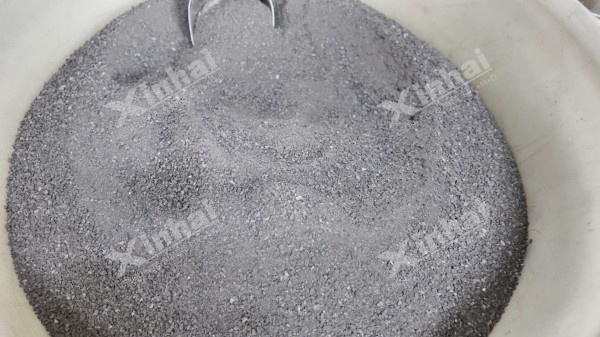
Oman chromite sample assays ~30% Cr₂O₃. Magnet separation failed at three field strengths, so gravity was used: grind to 100% passing 32 mesh, shake three fractions, recover -200 mesh slimes with centrifugal concentrator. Final concentrate hits ~42% Cr₂O₃.
Test scope and ore: The sample came from a chromite deposit in Oman, assaying about 30% Cr2O3 — high by chromite standards. High grade does not mean easy separation. Chromite is brittle, and over-grinding turns a share of it into slimes that gravity units cannot hold, so the material reports to tailings. The test therefore was not about whether chromium could be recovered, but about how much of it could be kept. The work covered route screening, grind size, size-fraction gravity separation, slime recovery and flowsheet combination.
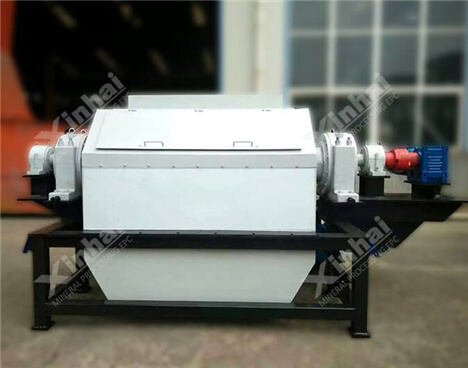
Magnetic separation screening: Chromite is weakly magnetic, and magnetic separation is cheap to run, so it was tested first. Three field strengths were compared — 4,000, 5,000 and 8,000 gauss — each in two configurations: single-stage separation and roughing-scavenging. Results were consistent across all three strengths: magnetic separation alone could not reach the target grade. Magnetic units keep their place in a chromite flowsheet, but on this ore they cannot carry the main duty. The route turned to gravity separation.
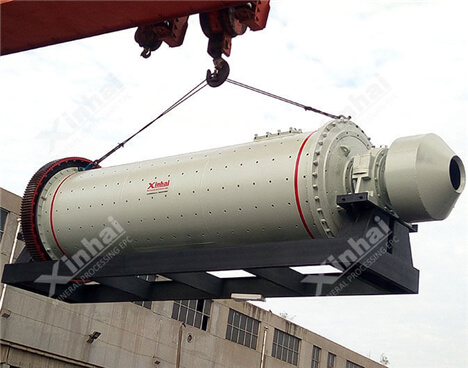
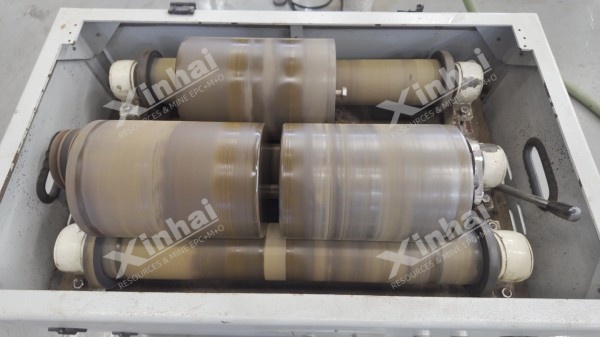
Grinding — the risk is over-grinding, not under-grinding: With gravity separation chosen, grinding became the first control point. The problem is not grinding too coarse; it is grinding too long. Over-grinding generates secondary slimes, and once the slime load rises, gravity units lose their grip. A rod mill was used, with grinding time and product size held under control — enough liberation, no more. Rod and ball mills behave differently here: rods work by line contact and give a more even product with less over-grinding, while balls work by point contact and grind finer but dirtier. For a brittle mineral like chromite, the rod mill suits better. The sample was ground to 100% passing 32 mesh, the starting point for all subsequent size work.
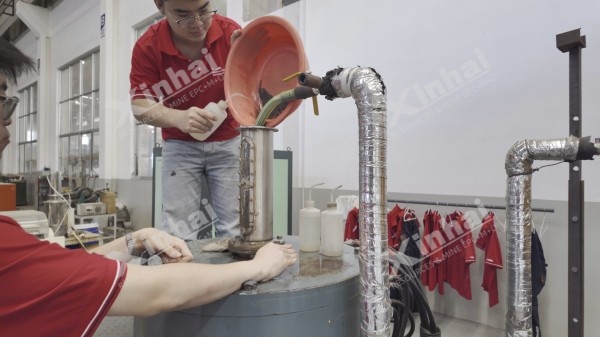
Gravity separation by size fraction: The ground product was classified at 60, 100 and 200 mesh, and each fraction went to a shaking table separately, with middlings re-treated. The cut points were not arbitrary — 60 and 200 mesh roughly mark the upper and lower limits a shaking table can handle stably, and the 100 mesh cut splits the coarse-intermediate range once more. Classification looks like a chore and is in fact the most labour-intensive step. A table's working range is narrow; run coarse and fine together and the stroke and slope can only be a compromise, so both ends lose out. Run them separately and each fraction gets its own stroke and slope.
Result of gravity separation: Grade rose from about 30% Cr2O3 in the feed to about 42% in the concentrate. The finer point is more useful: the 100–200 mesh fraction performed better than either the coarser or the finer fraction — liberated enough, not so fine that gravity loses it — a range that sits inside the working window of a shaking table. Comparison across the units tested was equally clear: the shaking table gave the strongest enrichment of all equipment tried.
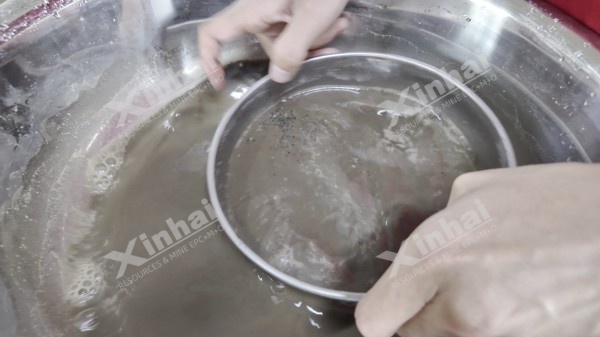
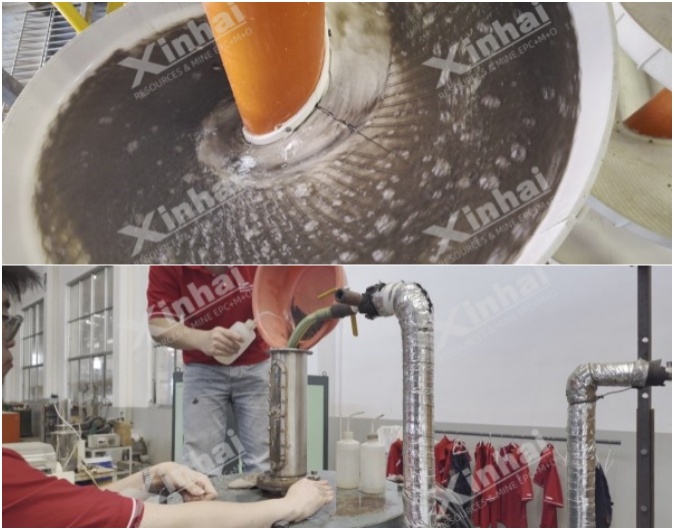
Slime recovery by centrifugal concentrator: The -200 mesh slimes are beyond what a shaking table can hold. Left alone, they go straight to tailings and discount every step before them. A Knelson centrifugal concentrator was brought in to retreat them. The unit amplifies the gravity field by high-speed rotation and captures the fine chromite — one of the few gravity devices that can work at this size. The point of this stage is not a headline grade; it is closing the last gap in the circuit. What classification and tabling could not hold, this stage recovers; the tonnage is small, but the gain in overall recovery is real.
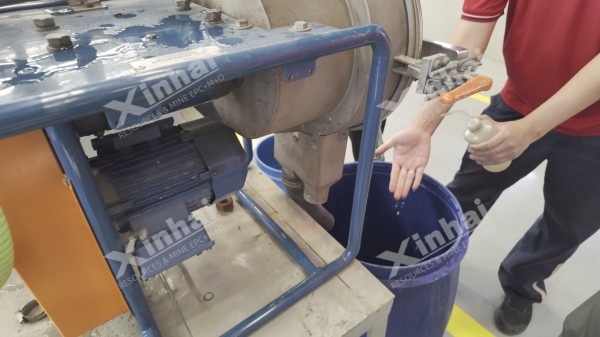
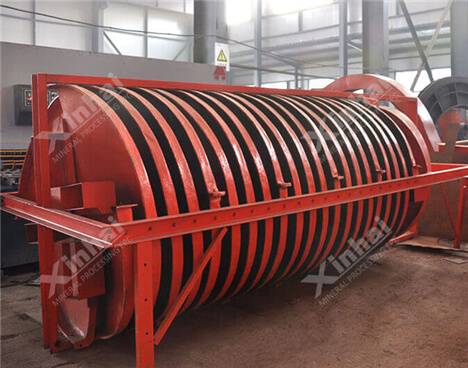
Flowsheet combination: The separate tests were then joined into one line: spiral chute roughing — shaking table or jig cleaning — centrifugal recovery of tailings slimes. The combination was not assembled by guesswork; each stage answers a finding from the tests above. The chute handles large tonnage and rejects most of the waste, so it goes first. The table has the precision and the enrichment, so it cleans. The concentrator takes the fines, so it sits at the end. About 20 kg of sample was run through the spiral chute to support this arrangement. Continuous locked-cycle testing is still required — good results stage by stage do not guarantee the same when the stages run connected.
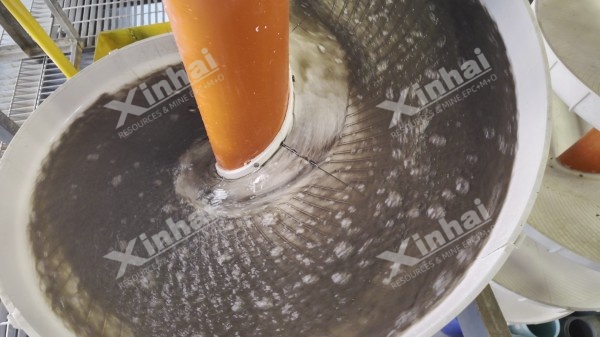
The test settled the route rather than the final flowsheet: stage grinding — gravity separation by size fraction — centrifugal recovery of slimes. Grade rose from about 30% to about 42% Cr2O3. The 100–200 mesh fraction performed better than the fractions on either side of it. The shaking table gave stronger enrichment than the other units tested. Magnetic separation alone, at any of the three field strengths, did not reach the target. Continuous testing of the combined flowsheet is the next step; final process and figures will follow the locked-cycle results.
For a high-grade chromite ore, the value of this work lies in where the losses were attacked. A rich ore does not lack chromium — it lacks retention. Grind without going past liberation, classify without mixing sizes, and keep the slimes in the circuit, and recovery follows.
 +86 13811510145